

Presented by Fernando Molina on the Territorio Blockchain channel.
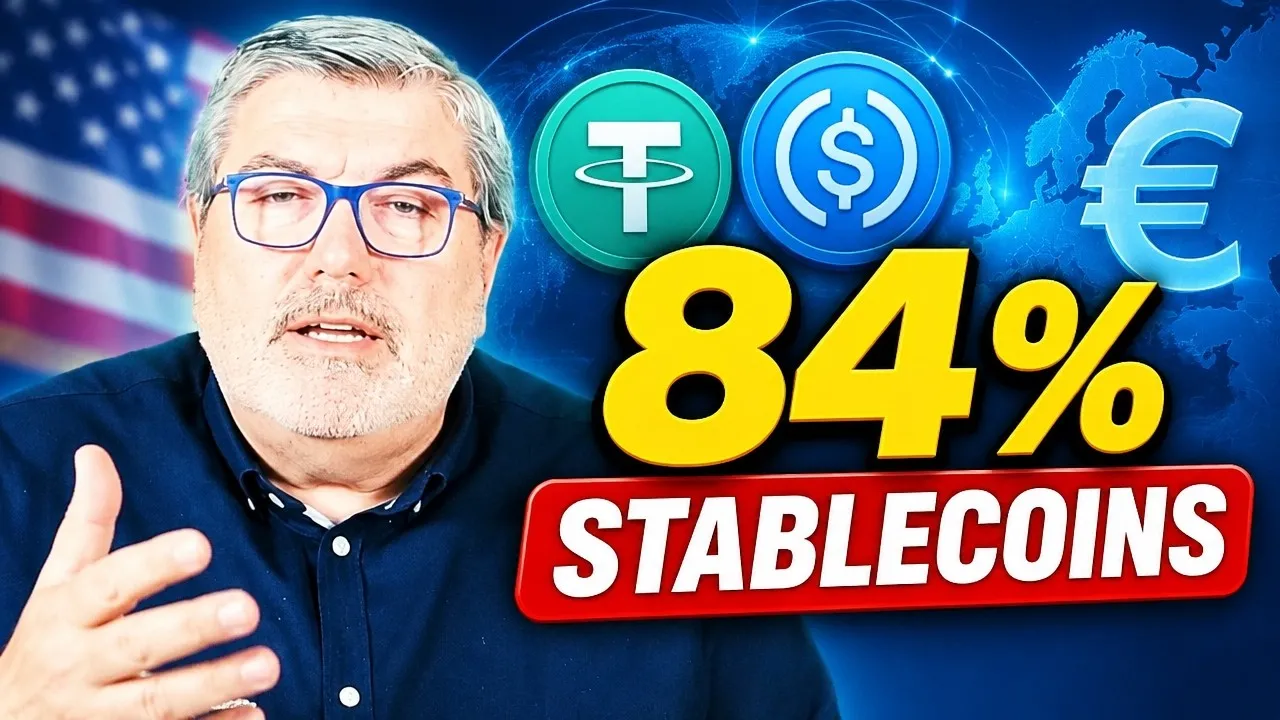
The stablecoin market is experiencing a striking concentration: according to the data Fernando Molina presents in this Territorio Blockchain video, 84% of the supply is in the hands of two companies, Tether and Circle, and all of it is pegged to the dollar. The question behind the analysis is simple and affects millions of people: what, then, happens to the euro, the peso or the balboa?
Two companies, a single currency: the dollar
Stablecoins are cryptocurrencies designed to keep their value stable against a reference asset, usually a currency. The problem, as the video points out, is that this reference role is filled almost exclusively by the US dollar, which turns an instrument designed to move money into a vehicle of de facto dollarisation for those living outside the United States.
GENIUS and MiCA: two different regulatory frameworks
The overview covers the two major rules that currently govern the sector on both sides of the Atlantic: the GENIUS Act in the United States and the MiCA regulation in the European Union. These frameworks determine who can issue stablecoins, with what backing and under what supervision, and they explain much of the differences between markets.
Six stablecoins in Latin American currencies
The video focuses on the launch of six stablecoins in local currencies by a Latin American company —according to the sources cited in the description, Ripio, whose CEO is Sebastián Serrano— as an example of a broader movement: the tokenisation of currencies other than the dollar.
Remittances: how much it costs to send money today
Using World Bank figures on the cost of remittances, the video compares sending money through services such as Wise with using the blockchain. It is worth bearing in mind a caveat the video itself notes: that comparison is a figure attributed to Sebastián Serrano and does not include the cost of getting on and off the blockchain.
Spain, the United States and Panama: three realities
The closing section is a tour of three very different contexts —Spain and Europe, the United States and Panama— to show that the value of a stablecoin is not the same depending on where you live, followed by a final reflection on what is exciting and what is worrying about this market.
This content is for informational purposes only and does not constitute financial advice.
Subscribe to our YouTube channel so you don’t miss any interview: Territorio Blockchain on YouTube.
Territorio Blockchain has affiliate agreements with Bitget and Tangem. If you sign up or buy through these links we may receive a commission, at no additional cost to you. These agreements do not influence our editorial content.
- Sign up for Bitget and get a discount on fees.
- Buy your Tangem wallet with a discount for Territorio Blockchain readers.
Get the best of the week in your inbox
Every Monday: the most-read stories on Territorio Blockchain, the new podcast episode and news about our events. Free, no spam.
We will send you an email to confirm. You can unsubscribe at any time with the link in every newsletter. Privacy