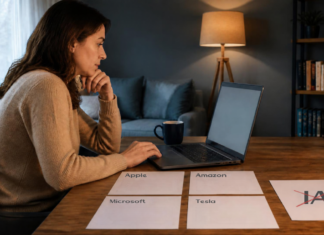















Daniel had to move urgently from Maracay to Caracas and was required to pay the rent in cash dollars, but he only had USDT.
– In Venezuela, the physical dollar is an intrinsic part of the national economy, and handling it has clear advantages.
– Payment for various services in Venezuela is made in cash dollars, and digital money is not commonly used.
– An app makes it possible to exchange digital dollars for cash in a matter of minutes.
“Exchanging digital dollars for cash was crucial for me to be able to move… and this app saved my life.” That phrase echoed loudly in the head of Daniel, a university student from Maracay, as he set down his suitcases in the apartment he rented in Caracas.
The move was not optional; his Economics studies in the Venezuelan capital demanded it. And although he already had everything planned, his plans became complicated at the last minute. The rent for the apartment where he would live was no longer charged in bolívars, and payment of the rent began to be required only in cash dollars.
It was 700 dollars in cash or nothing. The news hit Daniel’s stomach like a kilo of lead, considering he was already on the bus heading to Caracas. He had exactly a couple of hours to get access to the cash, or he would end up without a place to live in a new city.
In Venezuela, the physical dollar dominates transactions; from paying for a taxi to closing a housing contract, the presence of the US currency in physical form is more than evident.
But Daniel, 24, only had USDT, a stablecoin that is the equivalent of a digital dollar. For him, it was one more tool to shield himself from Venezuela’s economic difficulties. But for the landlord, it was useless, and that is why he would not accept that currency.
The Venezuelan economy, battered by years of crisis, has made the physical dollar a lifeline for millions. However, accessing it is not always easy, especially for those who, like Daniel, keep their savings in cryptocurrencies. Traditional exchange houses offer unfavorable rates, and time works against you when need is pressing.
The clock was ticking, the bus kept moving, and to top it off, the highway was completely clear. Sweat began to run down the forehead of Daniel, who remembered that the deadline to hand over the money was that very day. There was no other chance. Nor time to look for another rental, since he had to go to class the next morning.
Without cash, Daniel faced the possibility of ending up on the street, with his belongings in his parents’ pair of suitcases and without a roof over his head in a city that was, for him, completely unknown.
In a desperate attempt, he tried to exchange his USDT for bolívars in order to buy physical dollars, but the exchange rate gap, which already reaches 30%, penalized him. For his cryptocurrencies he would only get 600 dollars in bills, not enough to cover the rent.
The urgency consumed him; each failed attempt brought him closer to the edge of despair.
It was then that, browsing social media, he read about Muney App, a tool that promised to convert digital dollars into cash in minutes.
The app, designed to facilitate quick exchanges, allows users to convert USDT into cash dollars without cumbersome intermediaries or endless waits.
Daniel downloaded the app on his phone, a process that took a few seconds. He created an account with his email and a couple of basic details and then selected the exchange option. Next, he entered the amount of USDT he wanted to exchange, exactly 700 dollars, and the app showed him a clear rate, with no surprises and with fees ranging from 1% to 5%.
To carry out the transaction, he sent the USDT from his Binance account to the Muney wallet and, from there, requested the exchange for physical cash. In less than 15 minutes, Daniel received a notification: the money was ready to be picked up at an authorized location in Caracas.
A common challenge
Daniel’s story is not unique; it reflects a common challenge in a country where the informal economy and cryptocurrencies coexist with the physical dollar. Moving from Maracay to Caracas was already a big leap, leaving behind his city, his friends, everything for a university degree. But the rent complicated everything at the last minute.
The landlord, an inflexible man, made it clear that he only accepted bills, no transfers or promises. Daniel, stuck on that bus, checked with acquaintances, but the answers were slow or the rates left him short. Losing 100 dollars in the conversion to bolívars was not an option for him, since he needed every cent to secure his new home.
With Muney App, the picture changed. The app not only allowed him to obtain the full 700 dollars, it also gave him control over the process. Upon arriving in Caracas, Daniel rushed to where the business he would make the exchange with was located. After verifying his identity, he received the cash that would guarantee him a new life in the Venezuelan capital.
His relief was immediate. Cash in hand, he went to the apartment, where the landlord was already waiting for him. He signed the contract, left his suitcases there and lay down on his new bed. He breathed easy. What seemed like an impossible mission was solved with a tool that understood his needs.
For Daniel, the experience marked a before and after. Not only did he avoid sleeping on the street, he also discovered a reliable way to manage his finances in a country where the rules change constantly.
Muney App became his ally, a solution that other students, workers or families could use in similar situations.
In Venezuela, where cash dollars are still king but cryptocurrencies are gaining ground, tools like this one bridge the gap between the digital and the tangible.