




















Legal framework for investing in cryptocurrencies in Argentina. Regulation, taxes and opportunities in 2026
Argentina has a unique relationship with cryptocurrencies. As the country battles persistent inflation and monetary volatility, many see the chance to buy Bitcoin in Argentina and other digital currencies as an opportunity to protect their wealth. But a critical question arises: is it legal to invest in cryptocurrencies in Argentina?
The answer is yes. Investing in cryptocurrencies in Argentina is completely legal. However, Argentina is actively in the process of developing specific regulations for the sector. Understanding the current legal landscape is essential for anyone who wants to participate in this growing market.
Economic context and crypto demand in Argentina
Argentina faces sustained economic pressures. Inflation reached double-digit levels, significantly devaluing the Argentine peso. When your local currency is constantly depreciating, seeking alternative assets is rational.
Bitcoin positions itself as “digital gold” in this context. Its supply is fixed: only 21 million bitcoins will ever exist. It cannot be devalued through money printing. This feature attracts Argentine investors seeking to preserve value.
Ethereum offers exposure to blockchain technology with practical applications. Stablecoins pegged to the US dollar allow Argentines to access hard currency without relying on the traditional banking system.
Crypto adoption in Argentina is high compared with other Latin American countries. Many shops in Buenos Aires already accept cryptocurrency payments. The blockchain developer community is growing steadily. This active ecosystem confirms that investing in crypto is a common and accepted activity.
Current regulatory framework in Argentina
Argentina currently has no specific law that comprehensively regulates cryptocurrencies. However, several government agencies have issued guidance and partial regulations.
The Central Bank of the Argentine Republic has stated its positions on cryptocurrencies. It acknowledges that Bitcoin and other digital assets exist and are traded. Its stance is one of oversight rather than prohibition, similar to other modern jurisdictions.
The Federal Administration of Public Revenue (AFIP) has issued rules on how to treat cryptocurrency gains for tax purposes. This clarity is positive. It means the tax authority explicitly recognizes that crypto transactions generate tax obligations.
In 2023, the Argentine government showed interest in tokenizing public assets and modernizing financial infrastructure using blockchain. Although these efforts have not culminated in comprehensive legislation, they indicate that the official view is not adversarial but one of gradual integration.
Legal status of Bitcoin and cryptocurrencies
Bitcoin is not legal tender in Argentina. However, that does not make it illegal. Many assets are not legal tender but are perfectly legal to own and trade.
Its legal status is similar to that of foreign stocks, commodities or other securities. You can buy Bitcoin in Argentina fully within the law. There is no ban or restriction on personal transactions.
Crypto service providers (exchanges, wallets, brokers) operate in a regulatory gray area. Some have banking connections, others operate without them. Argentina is working on specific frameworks to regularize these services.
Platforms such as Fluyez that operate in multiple Latin American countries are designed with regulatory compliance in mind. They implement KYC (Know Your Customer), AML (Anti-Money Laundering) and other international standards. This provides a certain level of legal security even in jurisdictions with emerging regulation.
Tax obligations when investing in crypto
AFIP has made it clear that gains from selling cryptocurrencies are taxable. You cannot simply buy, sell and pocket the gains without declaring them.
1. Types of taxation
Gains may fall under various tax categories depending on your situation. If you are an Argentine resident and earn gains from selling cryptocurrencies, that income is taxable under the Income Tax.
The income tax rate in Argentina is progressive, ranging from 9% to 35% depending on your total income level. Capital gains from the sale of assets may be taxed differently from ordinary income.
If you buy cryptocurrencies with the intention of actively trading (rather than investing long term), AFIP may classify you as self-employed or as a trader. In that case, potentially higher rates would apply.
2. Required documentation
AFIP requires you to keep records of all your crypto transactions. For each transaction you must document the date, amount, purchase/sale price and value in pesos at the time of the transaction.
Many platforms such as Fluyez provide detailed reports of your activity. Download and save these reports. They are official documentation for AFIP should there ever be an audit.
This is especially important when you sell cryptocurrencies for Argentine pesos. AFIP can cross-check information with your bank accounts. Large unexplained deposits can trigger investigations. Having crypto documentation that justifies those funds is your best defense.
3. Treatment of losses
If you incur losses from selling cryptocurrencies, you can use them to offset gains in other years. Argentina allows losses to be carried forward under certain conditions. This once again underscores the importance of detailed documentation.
Financial and banking regulation
One complication for Argentine investors is banking access. Some banks have been reluctant to allow transfers to crypto exchanges due to compliance concerns and regulatory risk.
However, this situation is improving. Platforms with robust regulatory compliance such as Fluyez, LemonCash, Belo or Ripio work with banks that understand crypto. This makes deposits from Argentine bank accounts easier.
Alternatively, you can use credit or debit cards to buy cryptocurrencies in Argentina. Many people find this more practical than waiting for bank confirmation.
Consumer protection
Unlike some countries with crypto-specific consumer protection, Argentina relies mainly on general protection laws. The Consumer Protection Law applies when you acquire services from exchanges.
If a platform misrepresents its services, commits fraud or breaches agreed terms, you have rights under consumer laws. You can file complaints with provincial consumer protection offices.
However, this does not protect against losses from price movements. If you buy Bitcoin in Argentina at $70,000 and it falls to $40,000, that is market risk, not the platform’s responsibility.
Choosing recognized, regulated platforms significantly reduces risks. Fluyez has an established reputation in multiple Latin American countries, offering greater confidence than completely unregulated exchanges.
Comparison with other Latin American countries
Argentina is not operating in a regulatory vacuum. Other Southern Cone countries have made more progress on crypto.
Uruguay has issued licenses to exchanges. The country allows crypto operations under explicit supervision. Paraguay, with its low energy costs, has become a bitcoin mining hub.
Chile and Colombia have more developed regulations. Colombia in particular has clearly recognized cryptocurrencies within its tax system. Chile is moving toward comprehensive frameworks.
Argentina is following these precedents. The government is watching how other countries have successfully regulated without stifling the sector. Argentina is likely to issue clear legislation within 1-2 years based on these regional choices.
Future regulatory trends
Signals suggest that Argentina will eventually establish clear regulations for cryptocurrencies. Interest in blockchain among Argentine innovators and entrepreneurs is strong.
The government recognizes that the Argentine crypto community is significant and will keep growing. Banning or stifling the sector would result in a loss of talent and innovation. The sensible approach is to regulate constructively.
Projects such as the Buenos Aires Innovation Hub and provincial blockchain initiatives suggest official support. As these projects advance, specific regulations will follow.
For investors, this means that being present now on trusted platforms such as Fluyez puts you in a good position. When clear regulation arrives, you will already be positioned on established infrastructure.
Specific risks for Argentines
Although investing in crypto is legal, there are risks specific to the Argentine context. Political volatility can affect regulation. Changes of administration can bring different approaches.
Access to dollars is restricted in Argentina. Even if you buy USD stablecoins or Bitcoin, converting to pesos may require selling through an exchange. During periods of turbulence, liquidity can shrink.
The devaluation of the peso means that even if your Bitcoin holds its value steady, in peso terms it grows constantly. This is positive for wealth protection, but it requires a tax perspective.
Consider your time horizon. If you need liquidity in pesos in the short term, crypto adds layers of complexity. If you are seeking long-term wealth protection, it is an excellent tool.
How to start investing in Argentina
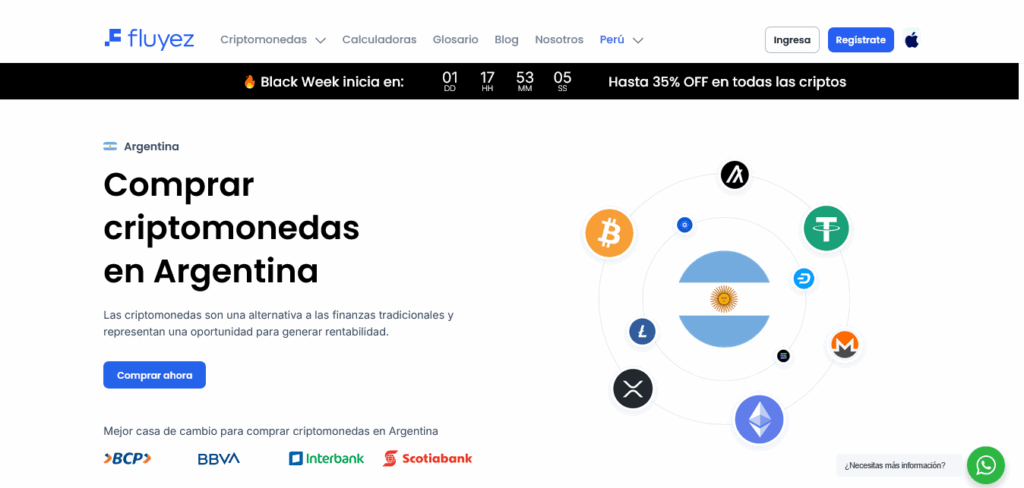
Choose a trusted platform. Fluyez allows Argentines to invest in cryptocurrencies in Argentina with local payment methods. The process is simple: register an account, verify your identity, deposit funds and start investing.
- Register with accurate information. When you use Fluyez or another platform, provide truthful data. This makes compliance easier and protects your rights should there ever be a dispute.
- Keep meticulous records. From day one, document every transaction. Download account statements periodically. This may seem tedious, but it is your best tool for tax compliance.
- Start small. You don’t need to invest much initially. Many Argentine investors start with small amounts in dollar equivalents. This lets you learn without excessive risk.
- Keep educating yourself. The crypto market evolves rapidly. Read the news, follow analysis, understand the projects that interest you. Education is your best defense against scams and poor decisions.
Conclusion
Investing in cryptocurrencies in Argentina is completely legal and represents a real opportunity. Persistent inflation and monetary volatility make assets like Bitcoin particularly attractive.
Argentina is developing regulations but currently operates under a permissive framework. This window of opportunity may not last indefinitely. Argentine investors who start now, educating themselves and using trusted platforms, will be well positioned.
Meet your tax obligations. Keep records. Choose regulated platforms such as Fluyez. That way, you protect both your wealth and your legal standing.
Cryptocurrencies offer a solution to monetary problems Argentina has faced for decades. For those who wish to participate, the path is clear and legal.
Read the complete guide on safety when investing in cryptocurrencies.