













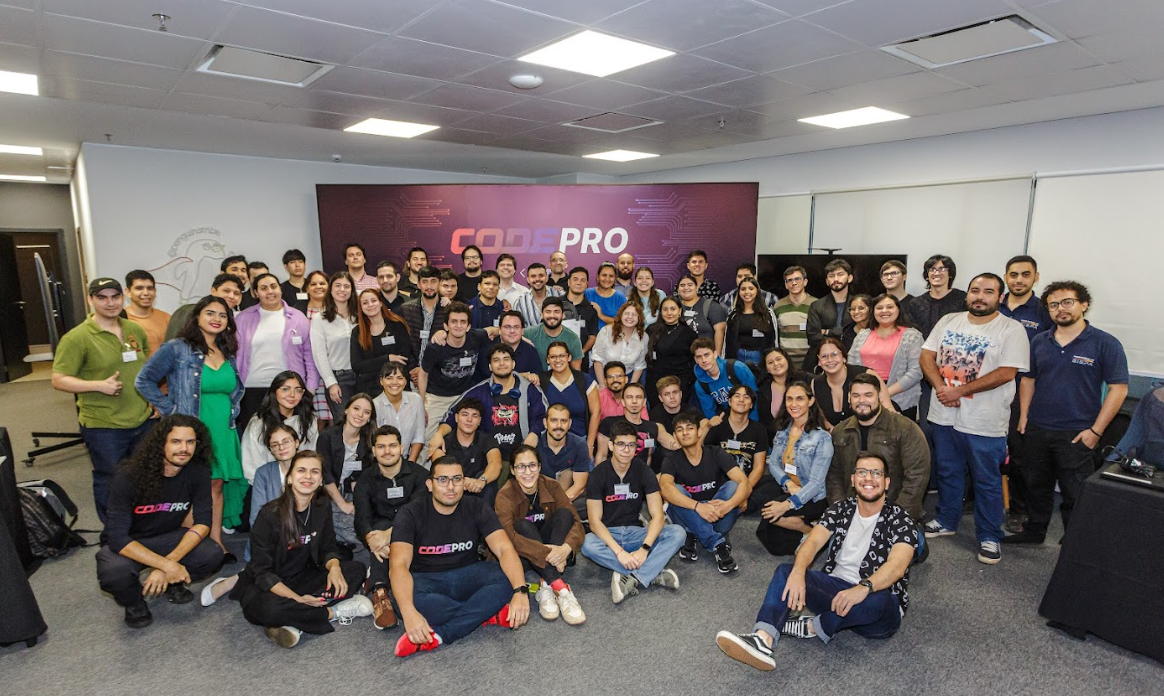

Paraguay is making its way onto Latin America’s tech map with an initiative that connects energy infrastructure, digital talent training and real employability.
The initiative is CodePRO 2025, a program driven by Penguin Academy, the educational arm of Penguin Group. In less than two years, the program has transformed the lives of dozens of young Paraguayans and puts forward an innovative model of social development sustained by renewable energy.
The proposal rests on a concept the organization has dubbed the Penguin Circle, in which the education and training of young Paraguayans is funded using the revenue earned by the Bitcoin mining data center operated by Penguin Group.
As Delia Garcete, CEO of Penguin Academy, sees it, the educational program guarantees students “a future in the tech industry,” one of the most in-demand sectors with the greatest global prospects.
“We use clean energy to produce technology; this technology generates value, and we reinvest that value in people. That way, what starts as electricity at Itaipú ends up turned into human potential,” Garcete sums up. In a country with one of the largest hydroelectric capacities in the world, Penguin Group’s strategy aims to turn that comparative advantage into an engine of social transformation.
Inclusion from scratch: no prior technical requirements
One of CodePRO’s pillars is its inclusive access policy. No prior experience in technology or specific knowledge is required. The program values curiosity, commitment and willingness to learn.
Garcete recalls the case of a participant who joined the program without owning a computer.
“He thought programming was impossible. But he started from scratch, with a simple ‘Hello, world’, and broke down the mental barrier separating him from the tech world. That’s exactly what we look for: people willing to transform their present,” she notes.
During the first weeks of the program, instructors observe participants’ performance, resilience and adaptability. Beyond technical skills, well-rounded development is prioritized, the executive says.
Overall, CodePRO’s structure combines intensive technical training with the development of soft skills. It begins with “Day 0,” a session for basic familiarization with digital tools. Participants then take on a technical Bootcamp and, afterwards, the Dive, a key stage in which they solve complex challenges independently.
Changing trajectories
Over its eight months, the program covers Python and JavaScript programming, data structures, web development, SQL, modern frameworks, data science and artificial intelligence. It also includes workshops on communication, teamwork, personal organization and empathy.
“CodePRO doesn’t just change trajectories, it changes ways of thinking, of relating to others, of seeing oneself. That’s why, when we talk about results, we’re not only talking about employability, we’re talking about lives rewritten with more opportunities, more tools and more confidence,” Garcete says.
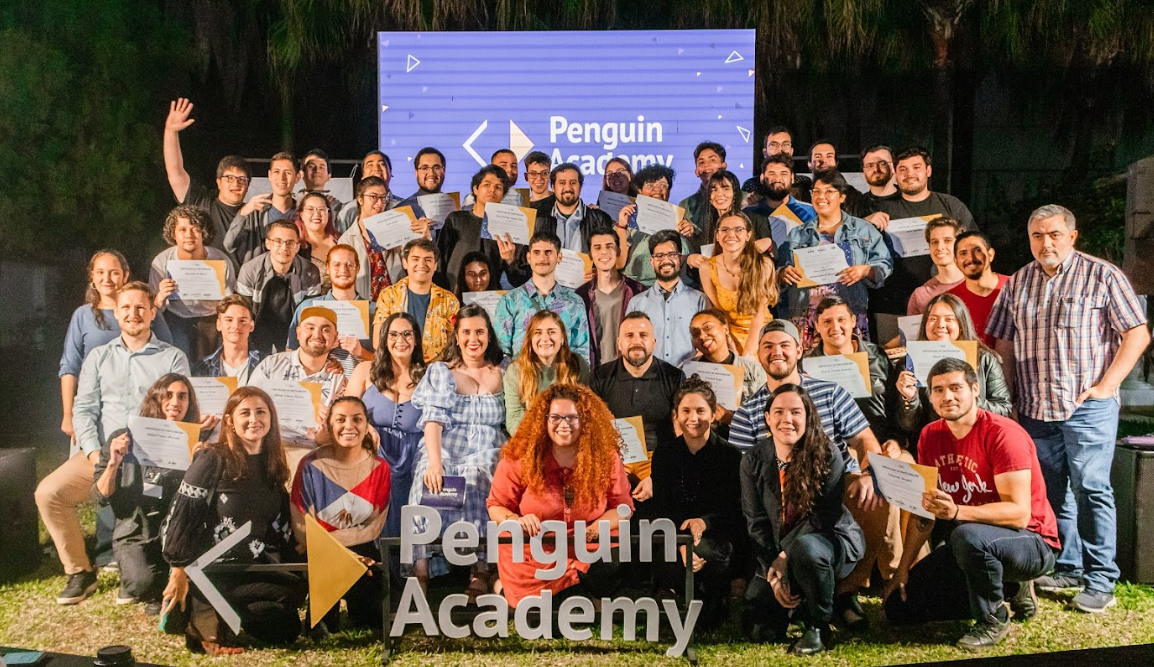
Since the program’s launch in 2024, more than 1,000 applications have already been received. Of those who have graduated, 98% say they are satisfied with their experience and 85% are already employed. In addition, more than 15 partner companies now trust the educational model of Penguin Group.
Among the standout stories is that of Olaf, a 29-year-old with previous experience in event production. Today he works in technology, handles multiple programming languages and has discovered new ways of relating to others and collaborating.
When he joined CodePRO, he not only learned to program in Python, JavaScript and C++, but also discovered what it means to work in a team, trust others and keep pace on challenging projects.
“When we talk about results, we don’t just mean jobs. We’re talking about lives being rewritten, people gaining confidence, autonomy and a new outlook on the future,” Garcete states.
Fair access model and regional vision
One of the program’s most innovative elements is the use of the Income Share Agreement (ISA). Thanks to this model, students pay nothing during their training. They only begin paying back a percentage of their income once they land a job in tech. This approach helps reduce financial barriers and opens up opportunities in traditionally excluded communities.
“The entire CodePRO 2.0 cohort chose this option. That speaks to the real need that exists. We can’t talk about inclusion without thinking about fair access,” Garcete maintains.
Penguin Academy is currently working with social organizations, companies and local governments to extend its reach to more regions within the country.
Looking ahead, the plan is to scale CodePRO beyond Paraguay. The organization is already in talks with regional companies and multilateral bodies to adapt the model to other countries with similar energy structures.
“Our vision is to build a local digital talent network with global impact. Paraguay has everything it takes to become a benchmark for tech training with social impact. And CodePRO is just the beginning,” Garcete concludes.