












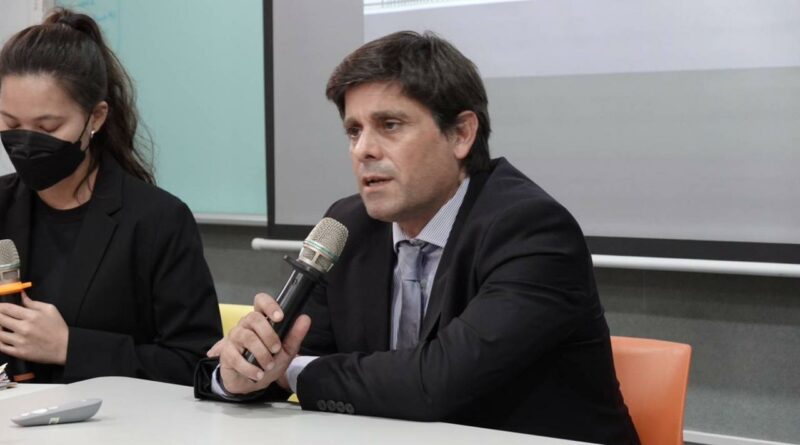

By: Pablo Rutigliano
I have always believed that history does not move in a straight line, but in acts. As in opera. There are moments of calm, of silent accumulation, of apparent stability. And there are moments when, suddenly, reality bursts onto the stage and breaks the logic of the narrative that sustained the order. In those instants, the world discovers that what seemed solid was, in fact, a staging.
Opera is not music. It is a theory of power. In it, the characters are not individuals: they are symbols. The conflicts are not personal: they are structural. Pagliacci does not tell a story of jealousy; it tells of the exact instant when fiction can no longer hold. Canio understands that his life is a tragedy, but the audience does not want truth. It wants continuity. It wants the show to go on, even if the foundation of the show is broken. That scene contains a brutal insight: systems do not survive because of their truth, but because of their ability to sustain a narrative.
The modern economy has functioned for centuries like an opera. Value was not technical evidence, but an institutional construct. Money was not just an instrument, but a narrative legitimized by states, central banks, markets and regulators. Assets were not merely resources, but interpretations of power over those resources. The economy was not a system of truth, but a system of representation.
For decades, that representation worked because no one could observe the entire stage. Opacity was not a flaw of the system; it was its condition for stability. The lack of traceability allowed value to circulate without memory, without evidence, without structural accountability. The economy was, in essence, a theater: every actor knew their part, every institution defended its role, and the audience accepted the illusion as reality.
Tokenization bursts into that theater as an ontological event. It does not simply introduce a new technology; it introduces a new form of truth. By converting real-world assets into traceable, programmable and auditable digital units, blockchain transforms value into a verifiable entity. Value ceases to be an institutional opinion and becomes a technical architecture. The economy ceases to be narrative and begins to be structure.
Here the deep connection with opera emerges. In theater, the stage is an artificial construct that allows reality to be represented. In the traditional economy, the financial system fulfills that function: it is the stage on which value is represented. Banks, markets, regulators, rating agencies, media and international organizations act as stage directors who decide what is legitimate, what is risky and what is real. Tokenization introduces a radical anomaly: it eliminates the need for the stage director. Blockchain does not interpret; it records. It does not opine; it verifies. It does not narrate; it evidences.
When evidence replaces narrative, the system enters into crisis. As in Pagliacci, when reality invades the stage, fiction becomes unsustainable. Tokenization does not destroy the economic system; it exposes its theatrical nature. And every system that discovers itself to be theater reacts with fear.
Resistance to tokenization is not technical, legal or financial. It is symbolic. It is not about understanding how blockchain works, but about accepting its political consequences. If value becomes traceable, power loses discretion. If property becomes programmable, sovereignty is redefined. If natural resources can be turned into verifiable tokens, the geopolitics of commodities is transformed. Tokenization does not threaten the economy; it threatens the traditional way of exercising power over it.
At this point, the figure of the innovator takes on a dimension that transcends business. They are not an entrepreneur or a technologist: they are an interpreter of their era. In opera, the protagonist does not create the tragedy; they reveal it. In the same way, innovation does not invent the conflict; it makes it visible. Tokenization does not create the crisis of the financial system; it exposes a crisis that already existed. The difference is that it can now be measured, recorded and demonstrated.
The 21st century is not only the century of digitalization; it is the century of the reconfiguration of power. The United States has begun to understand this logic more clearly than other regions. The regulatory discussion on digital assets is not a technical debate, but a geopolitical strategy. Regulating tokenization does not mean slowing it down; it means appropriating its architecture. Whoever defines the rules of tokenization defines the rules of global value. That is why regulation has become the new battlefield of economic power.
Europe is moving forward with regulatory frameworks that seek to balance innovation and control. China is developing its own digital architecture of value under a state-driven logic. Latin America faces a historic dilemma: remain a supplier of natural resources interpreted by others, or transform those resources into sovereign digital assets. Tokenization offers the possibility of breaking the structural dependence on commodities. But every possibility of emancipation generates internal resistance, because it alters traditional hierarchies.
The opera of the 21st century is no longer sung in theaters. It is executed in protocols, debated in parliaments, codified in laws and recorded on blockchain. The conflict is no longer between ideologies, but between architectures. The dilemma is no longer whether tokenization is legitimate, but who has the authority to define its legitimacy. As in Pagliacci, the drama is not personal; it is structural. The protagonist does not fight against individuals, but against the logic of the stage that contains him.
The opera’s final line —“La commedia è finita”— takes on a radical meaning in this context. It does not announce the end of an artistic work, but the exhaustion of an economic model based on opacity. When traceability becomes the standard of value and tokenization the grammar of the economy, the system will understand that the show can no longer go on. Not by political decision, but by structural necessity.
At that moment, the economy will cease to be a theater and will become a system of evidence. Value will cease to be a narrative managed by institutions and will become a verifiable structure. Power will cease to reside with whoever interprets value and will shift toward whoever designs the architecture that makes it possible. That is the true revolution of our time.
Opera, then, is not an aesthetic metaphor, but a key to reading history. It anticipates what the economy takes decades to accept: that every system of power is, at its core, a staging. And that every staging ends when reality bursts in with enough force.
Tokenization is that irruption.
It is not a technological fad.
It is not a financial trend.
It is not a dispute between companies.
It is the moment when value ceases to be an opinion and becomes architecture.
It is the moment when the economy ceases to be narrative and becomes structure.
It is the moment when power ceases to be discretionary and becomes verifiable.
As in opera, the audience will keep asking for the show to go on.
But history has already moved to a new act.
And when the curtain finally falls, the world will understand that it was not watching a show, but a historic transformation of the very concept of power.