














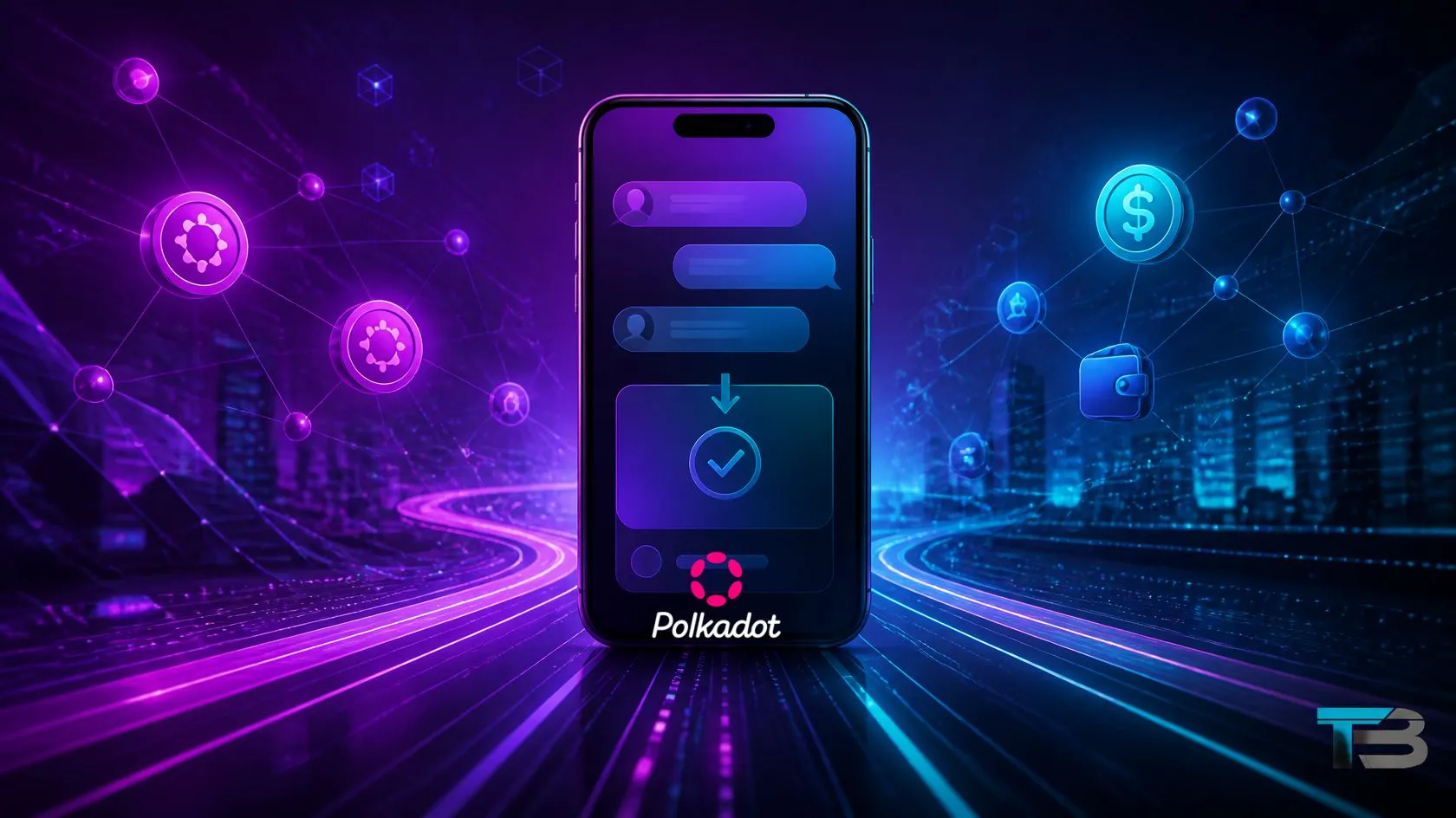

DOT holders have approved a change of course with 97% of the vote. The network will stop measuring its success by the number of developers and will instead measure it by the people who use its products, starting with a mobile app featuring private messaging and payments.
Polkadot has spent ten years building highways, and now it wants to make cars. On November 11, 2026, its community approved in referendum 1954 of its governance system Polkadot’s new strategy, proposed by the Polkadot Community Foundation (PCF). The network explains it in a post on its official blog dedicated to the new strategy.
A bit of context in case you’re not familiar with it. Polkadot is a blockchain network designed so that other blockchains can connect with each other and share security. Its token is DOT, and those who hold it vote on the network’s decisions, including both treasury spending and, in this case, the roadmap.
What changes with Polkadot’s new strategy
The network itself sums up its history in three stages. In 2016 the founding whitepaper was published, between 2020 and 2025 came the launch and the development of the infrastructure, and from 2026 onwards it’s time for what they call the product platform.
That platform will be home to applications that prioritize privacy and each person’s rights over their data. The bar they are setting is high. The apps have to be as simple as the ones already on your phone, be free, work with normal usernames instead of impossible-to-remember addresses, and be designed mobile-first. The user decides what data they share and with whom, and no intermediary can decide who gets to use a product and who doesn’t.
The most telling change lies in how success is measured. Until now, Polkadot boasted about how many workshops were working with its parts, that is, how many developers were building on the network. From now on, it will count how many people are driving. Progress will be measured by the users who reach the platform and the real use they make of it.
An app with private messaging and digital money
The factory’s first car is called the Polkadot app. It will be the flagship product and will offer private messaging and payments with digital money. The PCF will also fund its marketing campaign.
For now there is no launch date. The website only lets you sign up for a waitlist. And the ground it is stepping onto is far from empty, because competing in messaging means going up against apps like WhatsApp, Telegram or Signal, which count their users in the hundreds of millions.
dotUSD, the DOT-backed stablecoin
The economic piece of the plan is dotStables, a family of stable-value assets. The first will be dotUSD, which will track the price of the dollar and is designed to be backed by DOT. Oversight will be in the hands of the Polkadot Technical Fellowship, the network’s technical group, with independent audits and risk management.
The logic is circular. App users will need dotStables to pay, that demand will flow through to DOT because it is the collateral behind them, and the token will gain utility.
Here’s the crux. A stablecoin backed by dollars held in a bank and one backed by a token whose price goes up and down are different products. If DOT falls sharply, dotUSD’s stability will depend on how much excess collateral there is and what mechanism kicks in to cover the gap. The blog post details neither.
Nor does it clarify who the issuer will be or how it will fit within regulation. In the European Union, the MiCA regulation requires that a stablecoin referencing an official currency be issued by a credit institution or an authorized electronic money institution.
Fewer agencies and more incentives
The plan also touches the network’s wallet. Polkadot will stop paying for generic marketing contracts and will allocate that money to incentive campaigns tied to measurable usage. Put plainly, paying to make noise is over, and paying for users begins.
What remains to be known
The vote sets the direction, but leaves open questions that the blog post does not answer.
- When the Polkadot app will be available and in which countries.
- What level of collateral dotUSD will have and what happens if the price of DOT collapses.
- Who will issue dotUSD and under what license.
- What role the projects that already built on Polkadot’s infrastructure will play from now on.
Polkadot has decided it already has enough highways and lacks drivers. It remains to be seen whether the car wins people over. Would you switch your messaging app for one that also lets you pay, if it assured you that your data belongs only to you?
This content is for informational purposes only and does not constitute investment advice.
Get the best of the week in your inbox
Every Monday: the most-read stories on Territorio Blockchain, the new podcast episode and news about our events. Free, no spam.
We will send you an email to confirm. You can unsubscribe at any time with the link in every newsletter. Privacy