













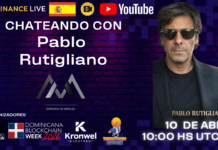







Pablo Rutigliano, CEO of Atomico 3 S.A., has denounced a smear and media harassment campaign against himself and his company, which specializes in the tokenization of lithium-linked assets.
Key points
- Pablo Rutigliano denounced a media smear campaign against him and his company Atomico 3 S.A. by traditional sectors of the mining industry.
- He accuses CAEM and former members of the Lithium Chamber of orchestrating attacks to halt lithium tokenization and preserve an opaque extractive model.
- Atomico 3 defends its pioneering role in crypto-asset regulation and announced legal action to protect its reputation and technological progress.
In a lengthy statement, Rutigliano attributed these actions to sectors linked to the “Argentine mining caste,” which seek to halt progress toward a more transparent and digitalized model of extractive activity.
Atómico 3 S.A., a pioneer in developing blockchain technologies applied to natural resources, has supported the regulatory process driven by the National Securities Commission (CNV) through General Resolution 1069/2024.
This rule seeks to lay the groundwork for the legal development of crypto-assets backed by physical goods such as critical minerals. However, according to the businessman, this progress was seen as a threat by traditional sectors of the mining business, which chose to respond with coordinated attacks.
Rutigliano took direct aim at the Argentine Chamber of Mining Entrepreneurs (CAEM), its president Roberto Cacciola, and its executive director Alejandra Cardona, along with former members of the Latin American Lithium Chamber, Favio Casarín and Andrea Polizzotto, who, he said, were removed for breaches of the bylaws. Also involved, he claims, is businessman Guillermo Sandler, whom he accuses of lacking technical training in blockchain and of taking part in an operation of “ideological falsehood and reputational damage.”
The most serious point of the complaint is the filing of an alleged accusation without evidence before the CNV, which, if confirmed to be false, would constitute a criminal offense under Article 245 of the Penal Code. According to Rutigliano, this complaint was backed by mining chambers and reproduced by “paid-off” media outlets, with the aim of publicly discrediting Atomico 3 during the Arminera 2025 trade fair.
The real reason behind this offensive, the businessman claims, is the attempt to block the tokenization process of the Salar de Mogna and maintain the status quo of the opaque extractive model. Finally, he demanded that those involved retract their statements within 48 hours and announced that he has already begun legal proceedings to defend his name, that of his company, and the future of a more transparent mining model in Argentina.
In conclusion, the case presented by Pablo Rutigliano reveals a fierce dispute between the drivers of technological innovation in the mining sector and those seeking to preserve traditional, non-transparent structures. The complaint not only highlights the internal tensions within Argentina’s lithium industry, but also issues an urgent call to guarantee a regulated, fair environment that is open to new forms of management and traceability of natural resources.
The future of lithium and its tokenization will depend, to a large extent, on the ability of the institutional system to respond with independence, legality and transparency.